Removable orthodontics, explained
Clear Aligners in Turkey
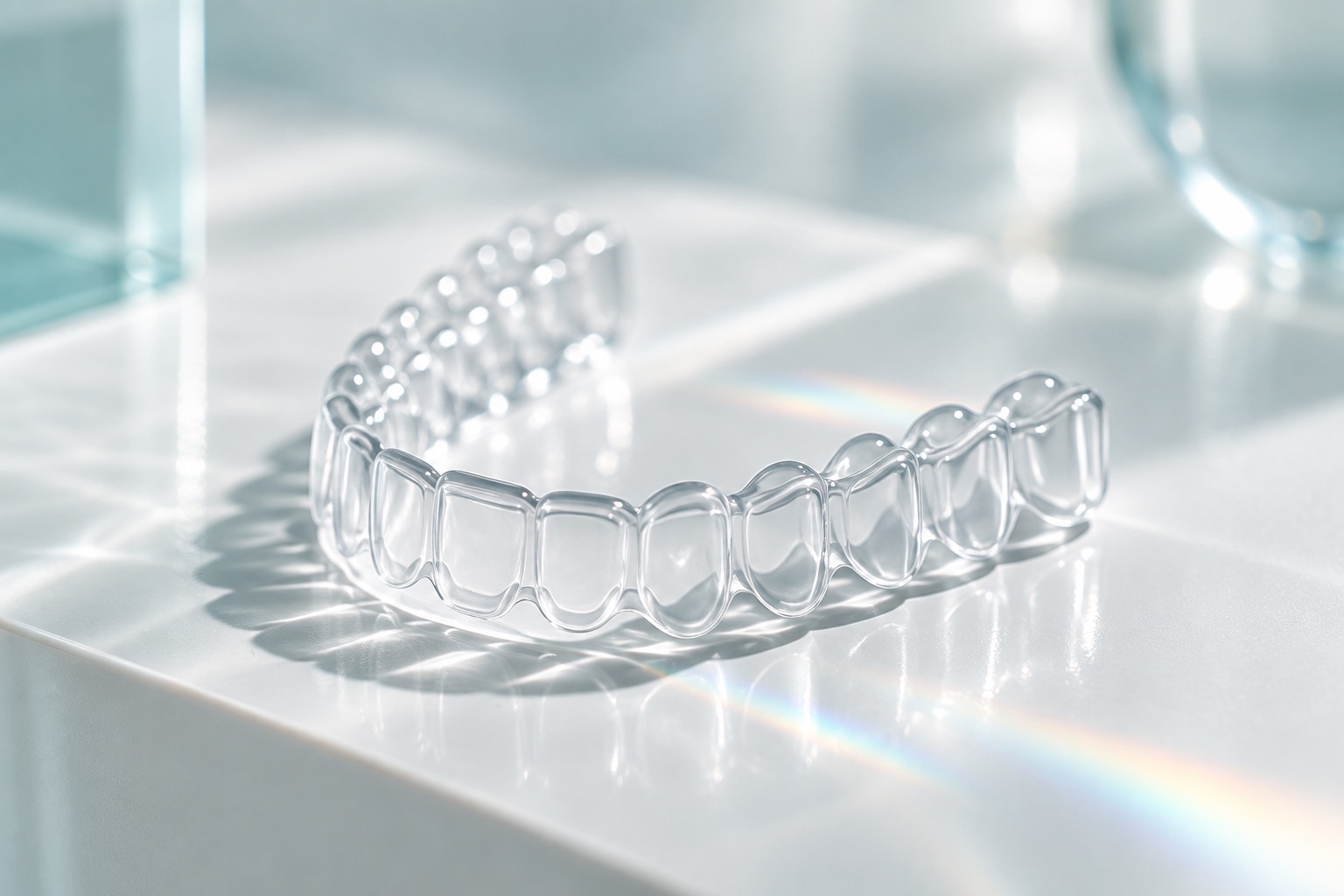
Clear aligners are thin, removable plastic trays that move your teeth in small steps, one tray after another. They suit many mild to moderate cases, and studies show results close to fixed braces in simpler cases. However, they only work if you wear them about 22 hours a day, with planned reviews and a retainer once your teeth are straight.
At a glance
- What they are
- A series of clear, removable plastic trays
- Daily wear
- More than 22 hours a day, out only to eat, drink and brush
- New tray
- Usually every 1 to 2 weeks
- Check-ups
- Usually every 6 to 12 weeks
- Best suited to
- Mild to moderate crowding or spacing
- Afterwards
- Retainers, ideally long term
These points come from UK professional guidance and research reviews rather than from any one clinic. Your dentist confirms your plan after an in-person examination.
How clear aligners work
Each aligner is a thin plastic tray that fits closely over your teeth. First, your orthodontist scans your teeth and plans the movement, often on a computer model. Then a laboratory makes a series of trays. Each tray then moves your teeth a small distance, and you change to the next one every 1 to 2 weeks.
You wear clear aligners all the time, except when you eat, drink anything other than plain water, or brush. That means more than 22 hours a day. Because they rely on steady pressure, even short breaks can slow progress. So wear time matters more with aligners than with fixed braces.
You may hear the name Invisalign. It is one brand of clear aligner, made by one company. Many other companies also make aligners, and dentists call the whole group clear aligner therapy. The brand matters less than a careful plan and a dentist who supervises it.
- 1
Attachments
These are small bumps of tooth-coloured filling material that your dentist bonds to some teeth. They give the tray something to grip, so it can move those teeth. However, they show a little more than the tray itself.
- 2
Making space (IPR)
If you need a little room, your dentist may gently file the sides of some teeth. Dentists call this interproximal reduction. Most cases need neither filing nor extractions. In one review, treated surfaces were no more likely to decay than untouched ones.
- 3
Refinements
At the end of the first series, teeth often need fine-tuning. So your dentist takes a new scan and orders extra trays. In a 2026 review, the need for refinement was higher in complex cases and for certain movements.
- 4
Retainers at the end
After any aligner treatment, you need retainers to hold your teeth in their new position. Without them, teeth tend to drift back.
Who clear aligners suit
Only an examination, with scans and any X-rays your dentist needs, can show whether aligners suit your teeth and bite. So read these lists as a guide rather than a diagnosis.
Clear aligners often suit
Other approaches may work better if
Clear aligners vs metal and ceramic braces
All three can straighten teeth. The right choice depends on your bite, how complex the movement is and how you live. Your dentist will explain which ones suit your case.
Your clear aligners journey
Aligner treatment usually takes many months, with regular reviews. UK guidance says treatment should start only after a face-to-face examination. Your dentist will confirm which steps happen in Istanbul and how reviews work from home.
- 1Online
Remote review
First, you send photos and any recent X-rays. Then a dentist explains whether aligners might suit you. However, this is only a first view, not a plan.
- 2Trip 1
Examination and scans
Next, your dentist examines your teeth and gums in person and takes scans and any X-rays you need. In addition, they explain all options, including no treatment.
- 3Planning
A digital plan
After that, your dentist plans each small movement on a computer model, and a laboratory makes your series of trays.
- 4Start
Fitting the first aligners
Ideally, you have your first aligners fitted in the clinic. Your dentist bonds the attachments, checks the fit and shows you how to wear and clean the trays.
- 5Months
Reviews in person or remotely
Then you change trays every 1 to 2 weeks. Meanwhile, your dentist checks progress every 6 to 12 weeks, in person or through photos, and tells you when you need a visit.
- 6Near the end
Refinements and retainers
Finally, your dentist checks the result, orders extra trays if needed and fits your retainers. You then keep wearing retainers to hold the result.
Living with clear aligners
Eating and drinking
Always take the trays out to eat and to drink anything except plain water. Then brush before you put them back, because trapped food and sugar raise the risk of decay.
The first few days
Each new tray can feel tight for a few days. Also, your speech may change at first, although this usually settles within 3 to 5 days.
Remote monitoring of clear aligners
Some clinics check progress through photos you take at home. In one review, this cut in-clinic visits by 1.7 to 3.5 on average. Even so, it did not shorten treatment, and a dentist must still review the images and call you in when needed.
If a tray does not fit
If a new tray will not seat, go back to the previous one for a few days and contact your dentist. Also, tell them if an attachment comes off.
Retainers for the long term
Teeth tend to move back after treatment and can also shift with age. So the longer you wear retainers, the longer your teeth tend to stay straight.
Risks and limits of clear aligners
The risks of clear aligners are similar to those of fixed braces. You may have sore teeth or irritated gums for a while. In addition, moving teeth often shortens the roots slightly, and teeth can move back if you do not wear retainers.
Aligners also have limits. In one study, teeth reached about half of each planned movement on average, and rotations were the hardest. For this reason, many plans need refinements. Meanwhile, the UK regulator and orthodontic society warn that no online process can replace a physical examination. You can read more about home aligner warnings in our orthodontics guide.
Some movements are harder for aligners, such as turning rounded teeth or pulling front teeth down. So your dentist may need refinements, or may suggest braces instead.
Poor cleaning while you wear trays puts your teeth at risk of decay. However, reviews found gum health was often better with aligners than braces, as long as people cleaned their teeth well.
As with any tooth movement, the roots often become a little shorter. Notably, this applies to aligners as well as braces.
Teeth can drift back if you stop wearing retainers. Therefore, plan for retainers from the start.
UK guidance says treatment should start only after a face-to-face examination with records, under a named dentist you can contact directly.
What your clear aligners plan should answer
Ask any clinic, including us, for clear written answers before you start.
- 1Who is the named dentist or orthodontist responsible for my treatment, and how do I contact them?
- 2Do my teeth and bite suit clear aligners, or would braces work better?
- 3Will I need attachments, IPR or elastics?
- 4How many trays and in-person visits do you expect, and what happens if I cannot travel?
- 5How will you monitor progress between visits, and who reviews my photos?
- 6Are refinements and retainers part of the plan?
- 7Could straightening my teeth help before or instead of veneers?
Clear aligners: your questions
UK orthodontic guidance says more than 22 hours a day. You take them out only to eat, to drink anything other than plain water, and to brush.
Invisalign is one brand of clear aligner. In fact, many companies make aligners, and they all work in a similar way, with a series of trays. Your dentist can explain which system they use and why.
For simpler cases treated without extractions, reviews found similar results. However, fixed braces gave better results in extraction cases in one review. The evidence is mostly low certainty, so your dentist weighs your case.
Refinements are extra trays made from a new scan near the end of treatment. They fine-tune movements that did not fully happen. They are common, especially in complex cases.
Often, part of the review can happen through photos. Still, UK guidance says you need a face-to-face examination first and a way to get in-person visits when needed. So plan local support before you travel.
Yes. After any aligner treatment, you need retainers to keep your teeth straight. The longer you wear them, the longer your teeth tend to stay in place.
Related guides
Medical review required before publication · General information only; it does not replace an examination, diagnosis or personalised treatment plan.
- British Orthodontic Society. Clear aligners
- British Orthodontic Society. What are clear aligners? Patient leaflet (2024)
- British Orthodontic Society. Advice if you are being treated with clear aligners but unable to attend (2020)
- British Orthodontic Society. Guidance on teledentistry and remote interactions in orthodontic care (2021)
- General Dental Council. Statement on direct-to-consumer orthodontic treatment (2021)
- Alhafi ZM et al. Quality and stability of treatment outcomes with clear aligners versus fixed appliances: a systematic review and meta-analysis (2025)
- Baneshi M et al. Effectiveness of clear orthodontic aligners in correcting malocclusions: a systematic review and meta-analysis (2025)
- Alhamwi AM et al. Duration of treatment with clear aligners versus fixed appliances in crowding cases: a systematic review (2024)
- Haouili N et al. Has Invisalign improved? A prospective follow-up study on the efficacy of tooth movement (2020)
- Rossini G et al. Efficacy of clear aligners in controlling orthodontic tooth movement: a systematic review (2015)
- Nogueira Matos K et al. Factors associated with refinement after the first series of clear aligners: a systematic review (2026)
- Kaur K et al. Clear aligners versus fixed appliances on periodontal health, pain and quality of life: a systematic review and meta-analysis (2026)
- Alhuwaizi MA et al. Clear aligners and fixed appliances on oral hygiene and periodontal health: a systematic review with GRADE assessment (2026)
- Sangalli L et al. Effectiveness of dental monitoring system in orthodontics: a systematic review (2024)
- Koretsi V et al. Enamel roughness and incidence of caries after interproximal enamel reduction: a systematic review (2014)
- Martin C et al. Retention procedures for stabilising tooth position after treatment with orthodontic braces. Cochrane review (2023)
- British Orthodontic Society. Retainers
- British Orthodontic Society. Conventional fixed braces
- NHS. Braces and orthodontics (reviewed 2026)
- Herrera D et al. Treatment of stage IV periodontitis: the EFP S3 level clinical practice guideline (2022)
Could clear
aligners suit you?
Send a few clear photos of your smile and any recent X-rays. A dentist will then review them and explain whether clear aligners might suit your teeth, what else could help, and how reviews could work from home. Your plan stays provisional until you're examined in person.